For health services & surgical groups
An empty theatre is the most expensive room in the hospital.
Near-day cancellations, over-runs and unplanned length of stay all begin in the weeks before surgery. Livel makes that window measurable, so a list can be built on readiness rather than optimism.
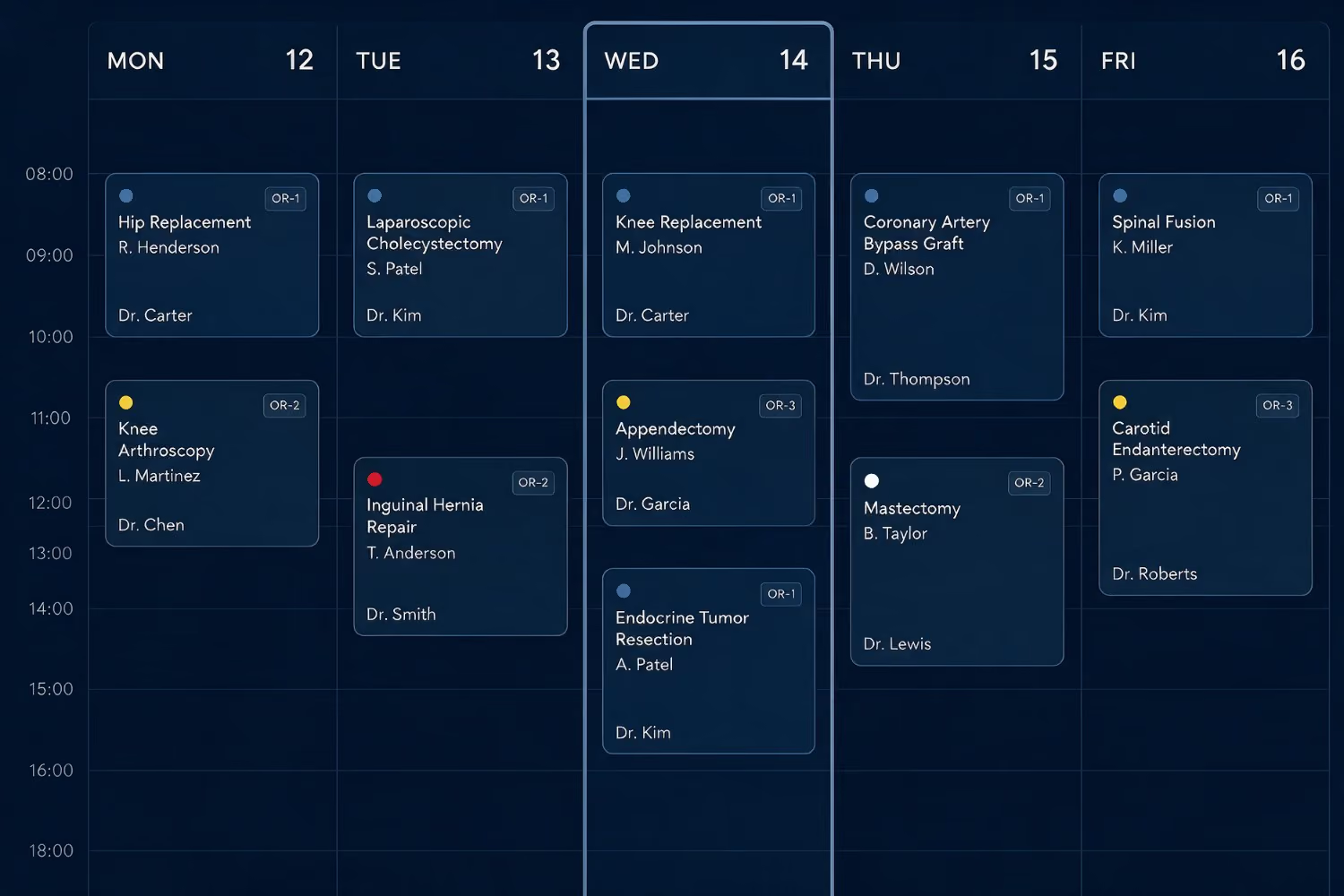
Scheduling view
Next week's lists, with the cases at risk of deferral flagged before the week starts.
Interface concept

Every avoided deferral starts as a conversation four weeks earlier.
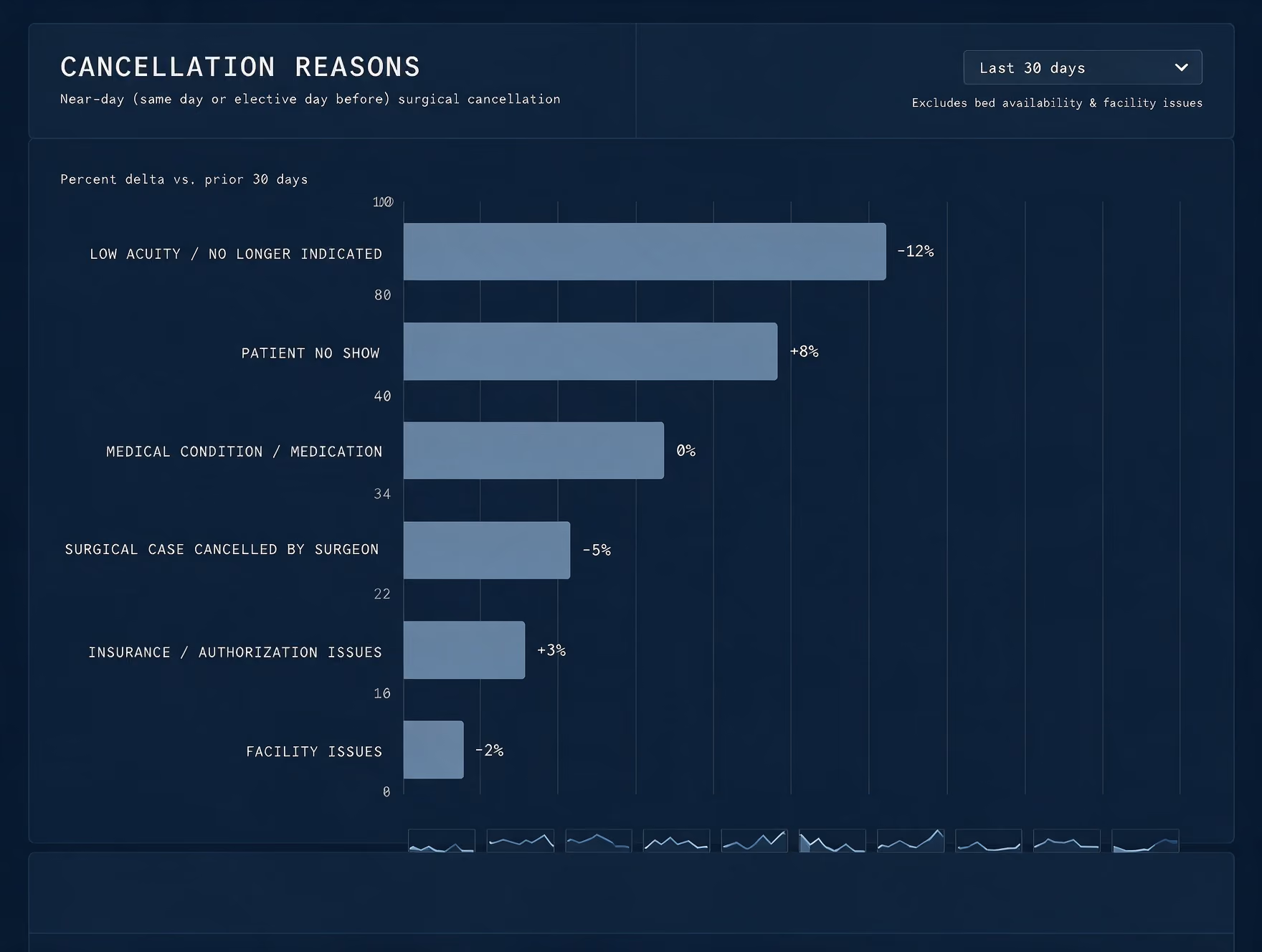
By cause, not by count
A deferral rate tells you nothing. The reason tells you what to change.
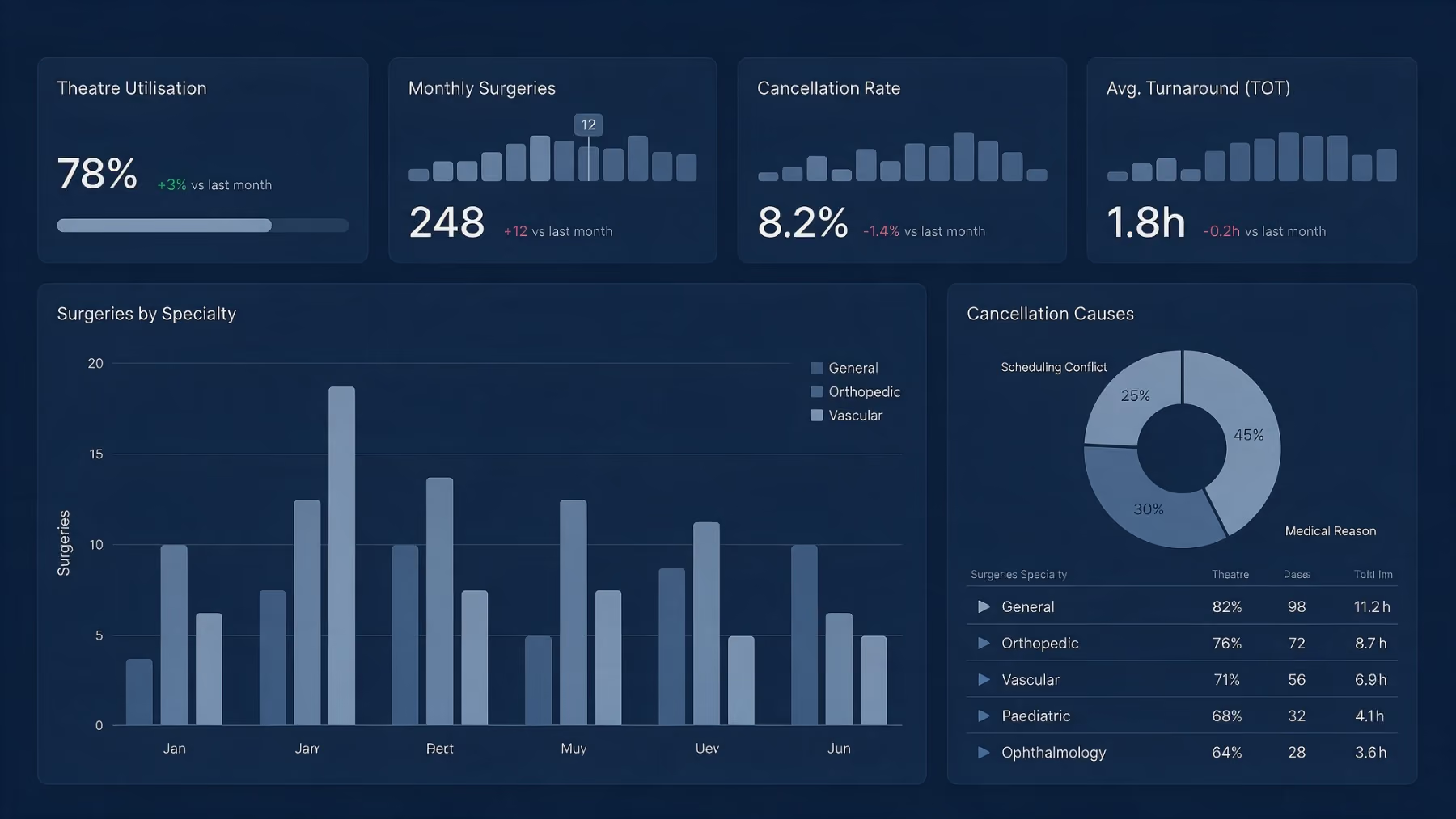
Board-level view
Utilisation, deferrals and specialty performance in the same place as the cause.
01 — Model it
A worked example.
Modelled for a 1,200-case elective service with an 8% near-day cancellation rate, using published effect sizes — not a promise.
Baseline used
Annual elective cases
1,200
Near-day cancellation rate
8%
Mean case duration
105 min
Assumptions
40% of near-day cancellations treated as avoidable; a 38% reduction in that avoidable group; 0.7 days shorter stay across the 18% of cases with a modifiable preoperative risk; four-week optimisation window.
Modelled annual effect
15
cancellations avoided each year
of 96 near-day deferrals
26h
theatre hours returned to the schedule
at 105 min per case
151
bed days released annually
0.7d × modifiable-risk cases
644h
senior clinician time returned
~14h weekly × 46 weeks
Illustrative model using effect sizes from published perioperative literature. Not measured Livel outcomes, and not a business case on its own — we will build one with your baseline during a pilot.
02 — Pilot
One pathway, eight weeks, an agreed baseline.
Scoped so it can fail cheaply and prove itself honestly.
Weeks 1–2
Scope and baseline
One elective pathway, one clinical sponsor. We agree the metrics and pull your current baseline before anything changes.
Weeks 3–4
Configure and train
Pathways, owners and escalation thresholds set to your service. Two short sessions for the pre-admission team.

Weekly review
Each week we go through what Livel caught — and what it missed.
Weeks 5–8
Run it live
Every patient listed on that pathway goes through Livel, with readiness published to the whole team.
Week 9
Decide honestly
Measured against your own baseline, presented to your governance group. If it did not move, it did not work.
03 — Procurement & IT
What we need from you, and what we do not.
Most of the friction in health software procurement comes from products that want everything up front. A pilot of Livel needs a clinical sponsor, a pathway and a baseline.
Security, privacy and hosting detail →Needed
A clinical sponsor — usually an anaesthetist or perioperative lead
Needed
One elective pathway and its current cancellation baseline
Needed
Browser access for the pre-admission and anaesthetic teams
Not yet
EMR integration — manual booking entry is enough for a pilot
Not yet
Data migration, or any historical patient record load
Not yet
An enterprise licence, or a commitment beyond the pilot term
Start with the list you cancel most.
We will model it with you in thirty minutes, then agree what a pilot would have to prove.