For anaesthetists & perioperative physicians
You already know who should have been optimised.
Livel is built so the patient who needed four weeks gets four weeks — and so your clinic hour goes on decisions rather than transcription. Designed by a specialist anaesthetist who still runs the list.

The moment it is too late
By the time the team is scrubbing, every decision worth making has already been made.
~0h
of senior time returned each week, modelled from documentation load alone.
0%
of listed patients screened with the same instruments — not just the memorable ones.
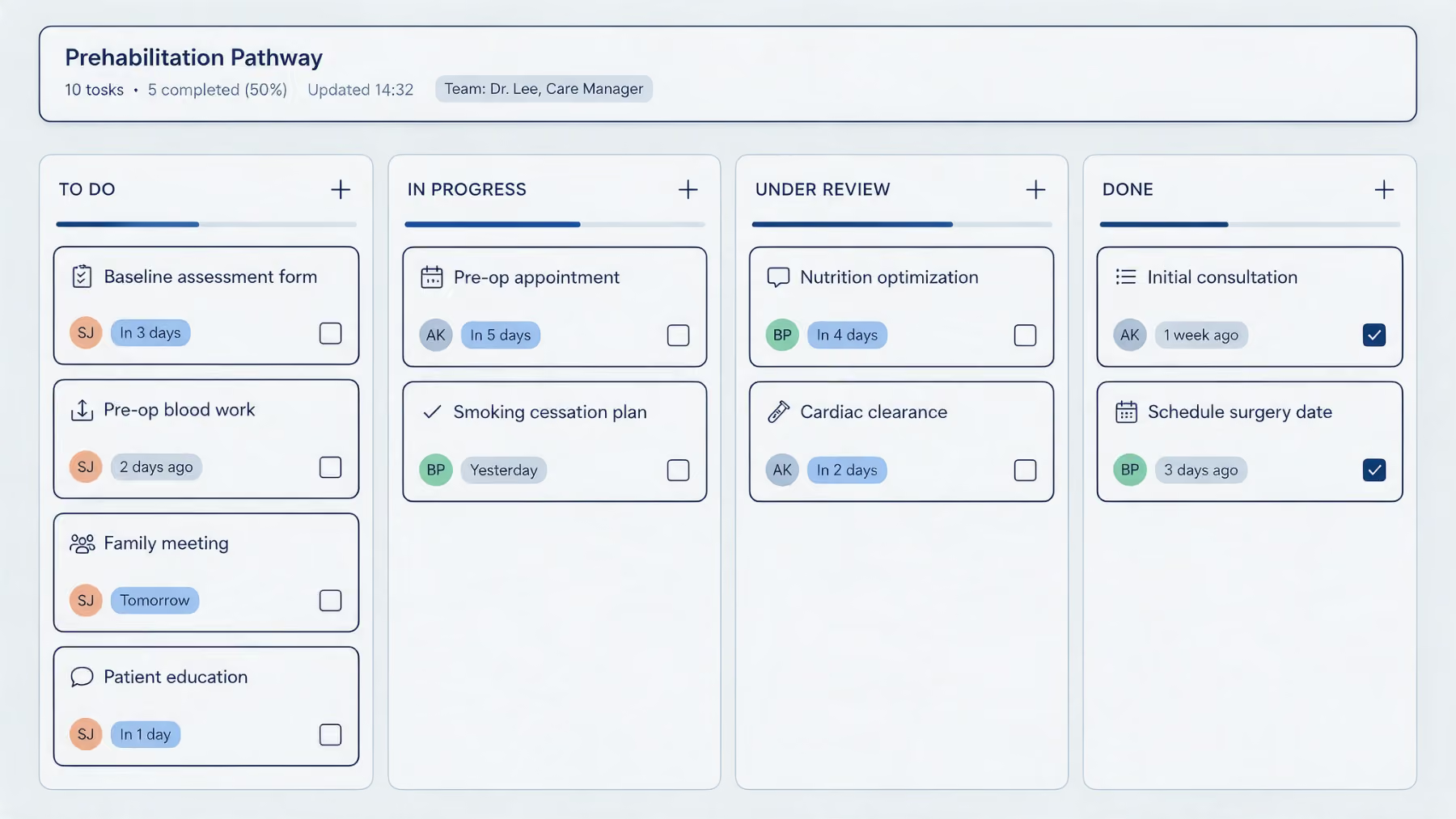
Owned, not hoped for
Every task carries a name and a date, so nothing waits on the clinic to notice.

Afterwards, too
A shorter stay starts with the four weeks before, not the ward round after.
01 — Your clinic
The same hour, spent differently.
Nothing is added to the clinic. The collecting is moved out of it.
Today
Clinic as collection
History re-taken from scratch, often for the third time in the journey
Free text that the next clinician cannot search or compare
Anaemia and frailty noticed, noted, and left without an owner
Optimisation suggested verbally and lost between clinic and theatre
The patient who needed four weeks arrives with four days
With Livel
Clinic as decision
Structured history completed by the patient before they arrive
Coded fields the whole team can query, compare and audit
Risk instruments applied to every listed patient, not the memorable ones
A four-week plan with a named owner and a due date per action
Readiness visible on the morning of the list, before the trolley moves

Pre-admission clinic
The history is already in. The hour is yours.
02 — Clinical governance
The reasoning is visible. The decision is yours.
A tool that scores patients without showing its working is a tool clinicians are right to distrust. Livel shows which instrument fired, on which inputs, and what it recommends — as a prompt, never a gate.
Regulatory position and data handling →Every prompt shows its inputs
Which instrument, which fields, which threshold. Nothing is a black box score.
Prompts, not gates
Livel never blocks a booking or overrides a clinical judgement. It escalates for review.
Published instruments only
Validated tools applied consistently. No proprietary risk model presented as clinical truth.
Auditable by design
Who saw what, when, and what changed — available for morbidity review and governance.
03 — What it changes
Modelled against a typical consultant week.
Where these figures come from →~14h
senior clinician time returned each week
Modelled · documentation load
−38%
avoidable near-day cancellations
Modelled · 8% baseline
100%
of listed patients screened, not a sample
Design intent
4 weeks
usable optimisation window, protected
Modelled · pathway design
Modelled from published effect sizes. Not measured Livel results.

04 — Advisory group
Shaped in clinic, tested by peers.
Livel is being built with an advisory group of anaesthetists, surgeons, pre-admission nurses and schedulers. If you run a pre-admission pathway and want it to work differently, that is the group to join.