Evidence
Nothing here is a new idea. It is an unimplemented one.
The evidence base for preoperative optimisation is mature. Guidelines exist. What is missing is a system that applies them to every patient, every time — and a vendor honest about which numbers are measured and which are modelled.

Pathology first, not last
Anaemia found at week four is correctable. Found at pre-admission clinic, it is a cancellation.
Claims labelled
Three ways
Measured, published or modelled — stated every time a number appears.
Instruments applied
0
validated scores, each with its source paper and its input list on screen.
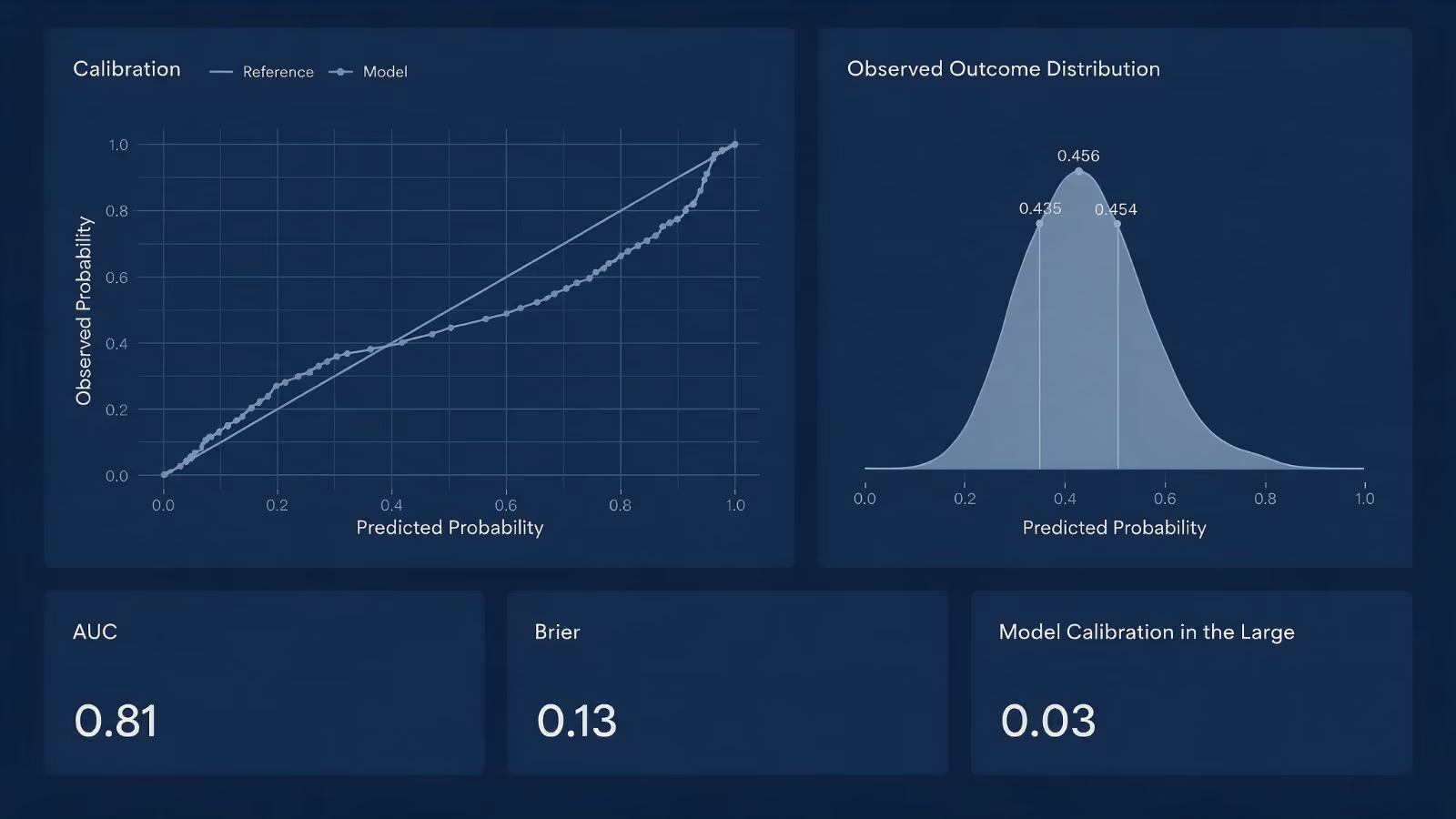
Calibration, not accuracy
We publish how well each instrument's predicted risk matches observed outcome, on the case mix it is used on.
01 — Themes
Five findings the product is built on.

Audits of elective surgery in Australia and internationally repeatedly find that a large share of cancellations on or near the day of surgery are attributable to preventable clinical or administrative causes — not to genuine clinical change. The information needed to prevent them usually existed at the time of booking.
In Livel: readiness is computed at listing, not on the morning of the list
Preoperative anaemia is associated with transfusion, postoperative complications and longer length of stay across major surgery. Correction with iron takes weeks rather than days, which is precisely why detection at pre-admission clinic is often too late to act on.
In Livel: anaemia screening fires at booking with an owned pathway and a due date
Combined exercise, nutritional and psychological preparation before major abdominal and other high-risk surgery shows benefit in functional recovery and complication rates. The consistent limitation in the literature is delivery: programmes work when patients are enrolled early enough and followed up.
In Livel: a four-week window with automated patient follow-up and completion tracking
Systematic frailty screening changes perioperative decisions — including whether to operate at all — when it happens early enough to inform consent and planning. Ad hoc screening finds the obvious cases and misses the borderline ones, which are the cases where the decision is genuinely difficult.
In Livel: a validated frailty instrument applied to every listed patient over threshold
Across the perioperative literature, the barrier is rarely knowledge of what should be done. It is that the anaesthetist, surgeon, general practitioner and pre-admission nurse hold different versions of the patient, and no one owns the interval between listing and theatre.
In Livel: one structured record and one readiness status, shared across roles
02 — Claim discipline
How we label numbers.
Health software is full of numbers that quietly change category between the slide deck and the contract. These are the three we use, and we say which one applies every time.
Measured
Our own result, from a real service
Collected during a pilot against an agreed baseline, with the service named where they permit it.
None yet — Livel is pre-pilot.
Published
Someone else's peer-reviewed result
An effect size or prevalence figure from the literature, cited to the paper it came from.
e.g. anaemia prevalence in major elective surgery.
Modelled
Arithmetic on published figures
A projection built by applying published effect sizes to a stated case mix. Labelled everywhere it appears.
e.g. every figure in the outcomes bands on this site.
03 — Model inputs
Every assumption behind the figures on this site.
Published in full so a clinician or a business analyst can disagree with them specifically rather than generally.
Run the model on your own service →Annual elective case volume
1,200
Baseline near-day cancellation rate
8%
Share of cancellations treated as avoidable
40%
Reduction applied to the avoidable group
38%
Cases with a modifiable preoperative risk
18%
Length-of-stay effect in that group
−0.7 days
Optimisation window
4 weeks
Senior documentation time recovered
~14h / week
Setting
Single metropolitan health service
04 — References
Ask for the reference list.
We will send the full citation list, the model spreadsheet, and the specific pages each effect size came from. One email, no sales sequence.
Livel is a clinical coordination tool and is not represented as a diagnostic device.